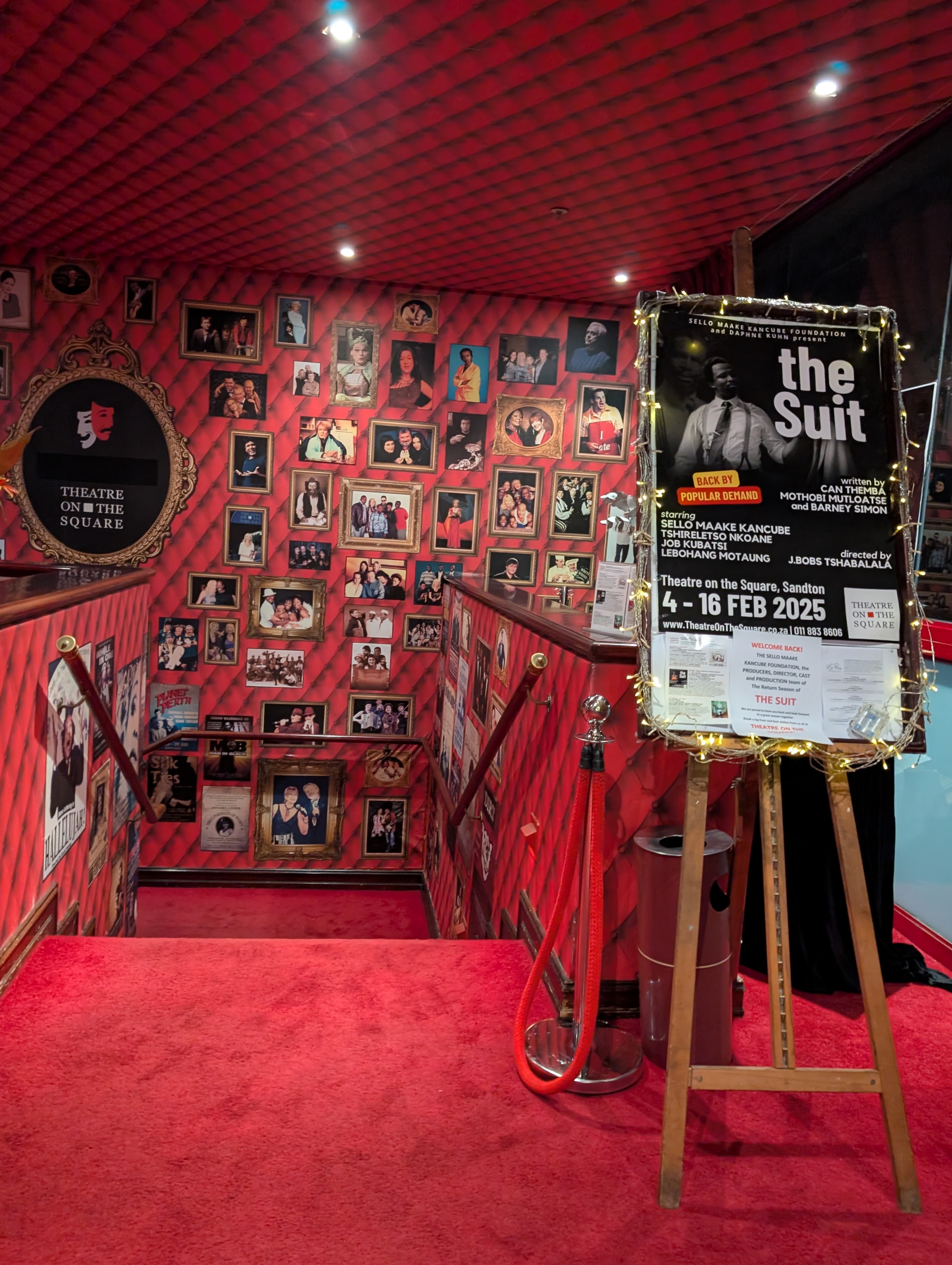
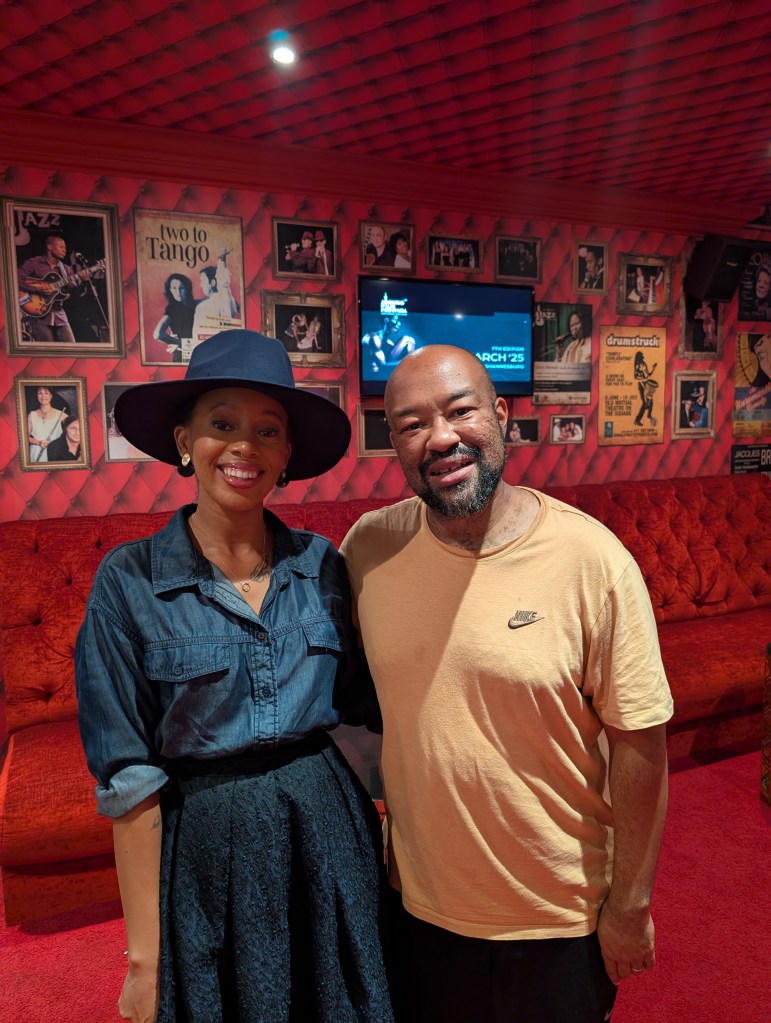
I love the Theatre on the Square’s homage to South Africa’s great thespians. Photographed by Lebohang Masango © 2025
Scandal, lies and betrayal in Sophiatown. You know that couple down the road? They’ve been married for years yet they’re still so smitten. It’s hard not to be moved by the way they look at each other. Their eyes shine with utter adoration.
The women of Sophiatown gather around the communal taps with their washing and wonder if their husbands ever speak about them the way Philemon speaks about Matilda. The men in the shebeens drink heartily, laugh loudly and suspect that a heavy hand of women’s witchcraft is responsible for Phil’s devotion.
I mean, how else would you explain a working man who, despite the risk of long bus queues and longer hours of navigating both petty and grand apartheid in the big city, still insists on bringing breakfast in bed for his wife on a daily basis? A housewife at that!
Yes, those two have the kind of love that can make onlookers sick with jealousy. Those two have the kind of love that is ripe for gossip and slanderous accusations of all sorts. Well, that’s until one fateful morning…
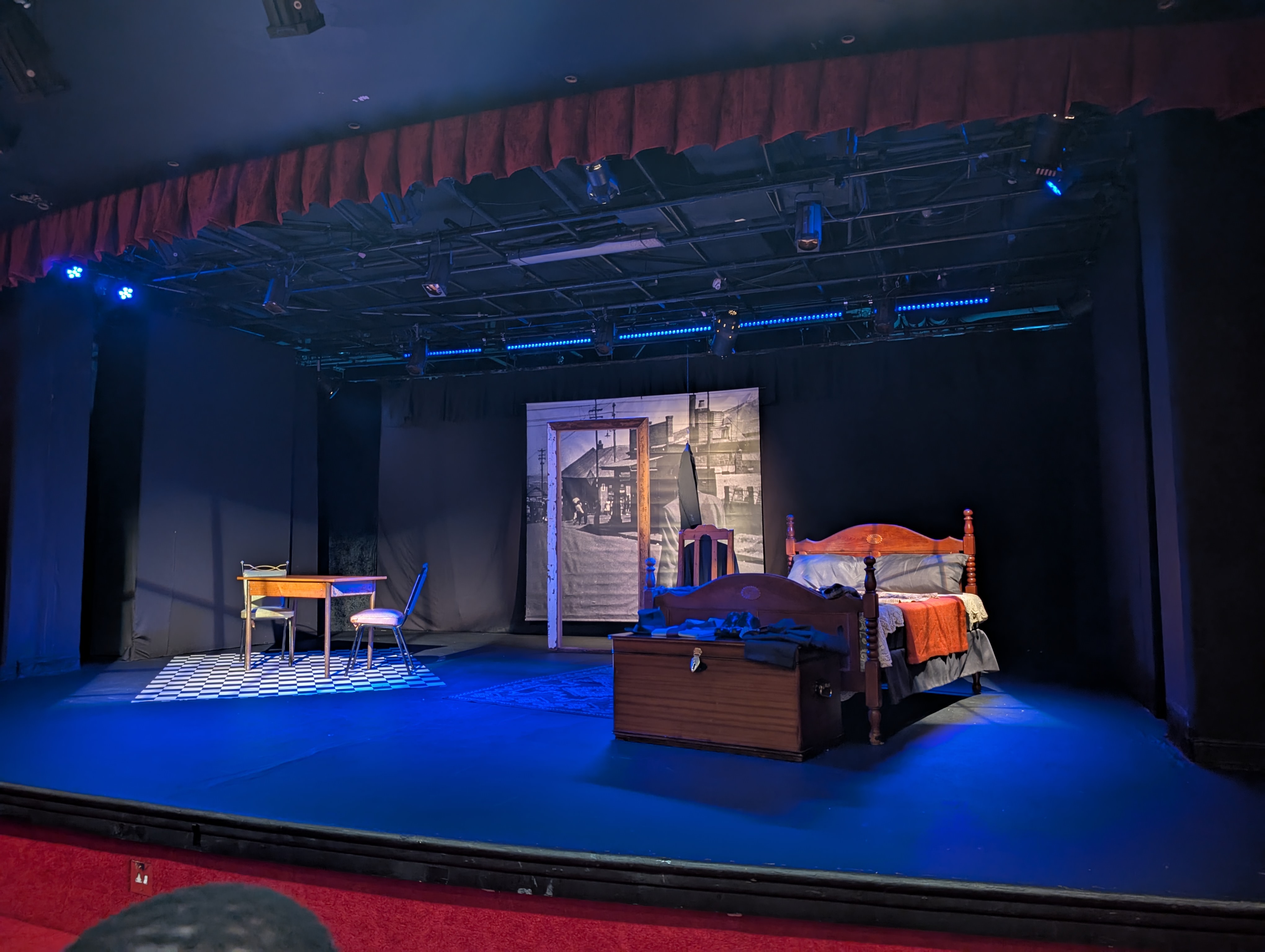
‘The Suit’ stage set photographed by Lebohang Masango © 2025
After a successful season from October – November 2024, the Sello Maake ka Ncube Foundation, Pearl Maake ka Ncube and Daphne Kuhn have reprised The Suit at the Theatre on the Square at Nelson Mandela Square, Sandton City.
Starring in the play are household name, Sello Maake ka Ncube as Philemon, Tshireletso Nkoane as Matilda all forlorn, veteran actor, Job Kubatsi as Mr Maphikela and Lebohang Motaung in a few roles with excellent comedic precision. The director is none other than the boundlessly talented, J. Bobs Tshabalala.
So, you see, nothing would have stopped me from attending the opening night of The Suit last Tuesday, 6 February. The last time I saw the theatrical adaptation of Can Themba‘s iconic short story, I was in it. (Yes, at the best high school ever: the National School of the Arts.) So, you know with nervousness and butterflies, that’s as good as not seeing it at all. Now, I can happily confirm that the play is a must-see and there are so many aspects that make it special.
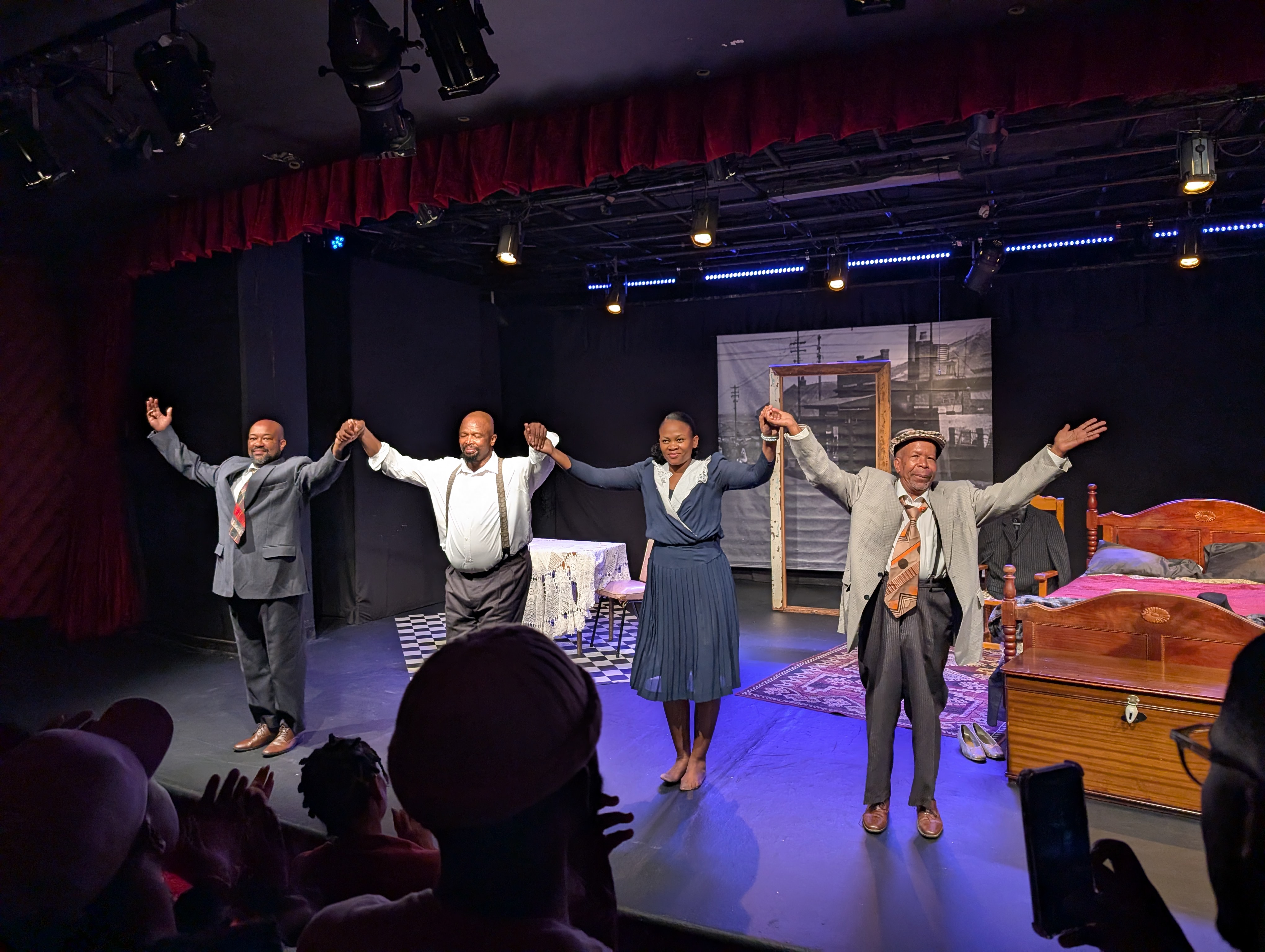
Lebohang Motaung, Sello Maake ka Ncube, Tshireletso Nkoane and Job Kubatsi photographed by Lebohang Masango © 2025
Firstly, I enjoy theatre productions with sparse and static sets, especially when the story spans multiple locations. In this instance, it’s true to history with apartheid spatial planning and economic oppression making it unavoidable for working-class black South Africans to live in modest homes, often without indoor plumbing.
Beyond this particular play, I like that minimalist stage sets showcase the director’s creativity in blocking the actors’ movements and invites the audience to participate. We are not passively watching as props and changing sets tell us what to see and think but we are actively engaged in imagining along with the performers.
They move their hands and we each see our own versions of breakfast on a tray. They walk together and we see the curb-side walkways and Sunday afternoon Sophiatown taking shape in our minds.

Secondly, I appreciate the choice that Tshabalala made with the script. Actually, I’ll admit that I’m not sure whether to credit him for that or whether that was part of the original adaptation by Mothobi Mutloatse and Barney Simon in 1994.
Either way, I enjoy that the narrator is given voice by each of the performers and we’re all able to indulge in the richness of Can Themba’s pen as he describes the magic and mundanities of daily life in 1950s Sophiatown.
As I mentioned earlier, the play was originally a short story published in 1963 by Can Themba in The Classic, a literary journal established by Nat Nakasa and Nadine Gordimer. Sadly, it was immediately banned by the vindictively wicked apartheid regime. I can only speculate that the story’s themes of adultery and, most importantly, its setting was inflammatory to the racist apartheid regime.
You see, by the time the short story was published, Sophiatown no longer existed. Around this time, about 70 years ago, the police moved in with their trucks to forcibly remove people from their homes and left them scattered all over a strange new place called Meadowlands. So, it was an act of the utmost defiance to write this name, to claim this place, to identify themselves as its people and to resist erasure in the most public way possible.
The spirit of dissidence loomed large in a few pages about ordinary people living and loving in a neighbourhood that existed as a testament to the vitality of black life and black joy. This is what I love most about art and South Africa’s rich history of theatre and literature, in particular.
Not only does The Suit and Sophiatown still exist despite those terrible devils in Pretoria – we can all walk into the theatre, take our seats and enjoy a journey into a time gone by where the focus is not overt structural violence but something much more ordinary; the slow anguish of love’s once-hot flames burning low. We take a journey through a slice of life in a time we can never access but we can read, imagine and dream together.
And when that’s done, we remember. We breathe in reverence for our history and our ancestors who walked this city before we did and fought for everything we have now; our hard won victories in being and staying human despite the violence of dehumanisation by the worst kinds of people.
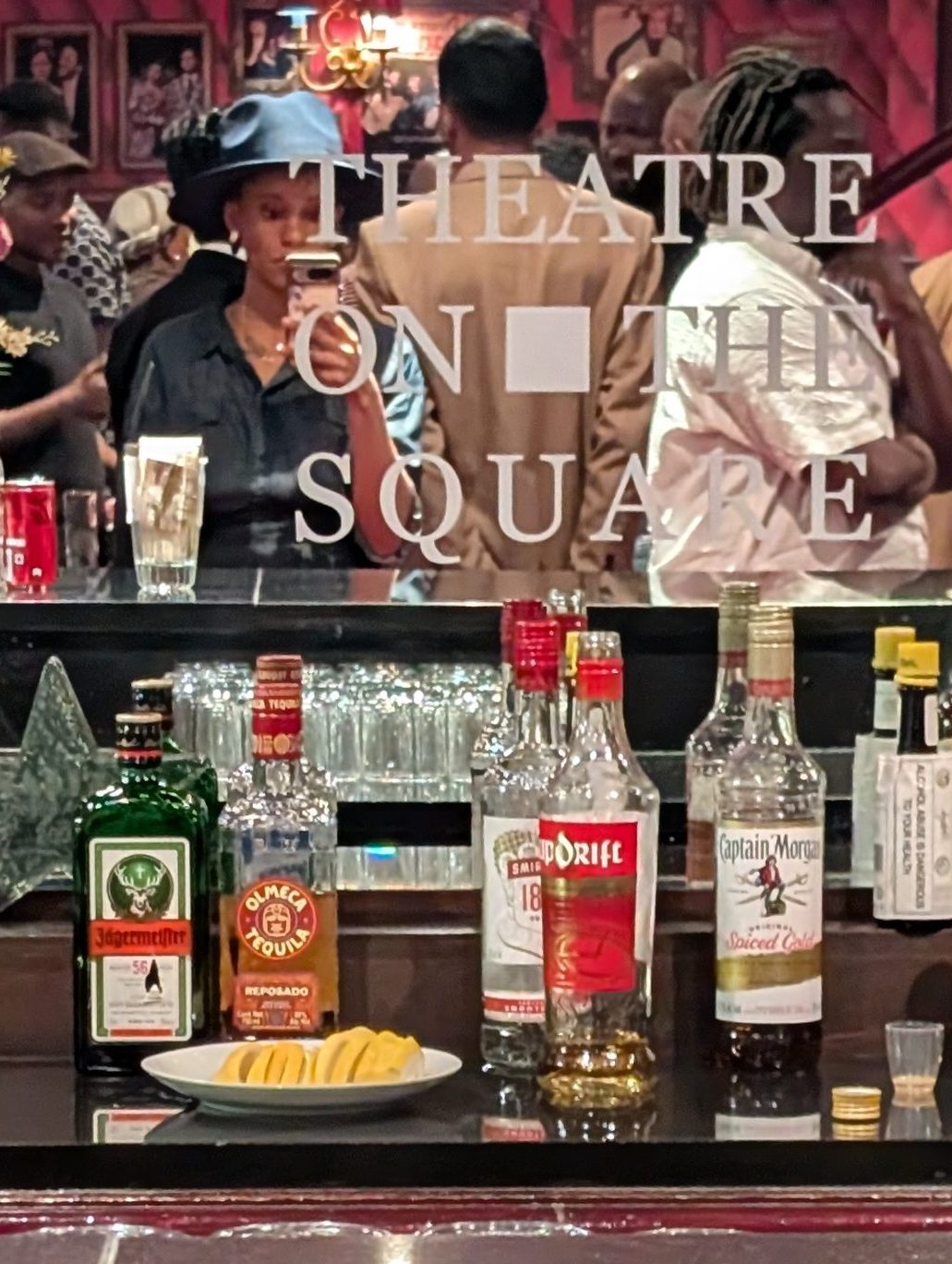
A selfie in the lobby photographed by Lebohang Masango © 2025

 Lebohang Masango
Leave a comment